Trust & Safety
Property Scam in Islamabad – How to Spot Fake Listings, Fraudulent Dealers & Fake Documents
A 10-marla house in a prime Islamabad location at an unbelievably low price. A plot being offered urgently by an "owner" who needs cash today. A dealer showing you beautiful documents and promising that the transfer will be completed within a few hours.
These offers can be tempting — especially when the seller creates a sense of urgency.
But property transactions involve much more money than an ordinary classifieds purchase. A fake listing, fraudulent seller, disputed property, forged document or illegal development can turn a seemingly great deal into a financial nightmare.
If you are buying property through an online classified platform, social media or a property dealer in Islamabad, never rely on the listing, photographs or documents shown by the seller alone. Verify the property independently before paying any token, advance or booking amount.
Common property scams in Islamabad
1. The "too good to be true" property
One of the oldest tricks is advertising a property significantly below its normal market value. The seller may say:
- "Owner urgently needs money."
- "Today only."
- "Family emergency."
- "Cash deal — that's why the price is low."
- "Pay the token now or someone else will buy it."
A genuine urgent sale can happen, but an unusually low price combined with pressure to pay immediately is a major warning sign. Don't let the possibility of a bargain replace proper verification.
2. Fake property owner
The person showing you the property may not actually own it. A scammer can obtain photographs, property information or copies of documents and present themselves as the owner. They may even have convincing-looking CNIC copies, allotment letters or sale documents.
Before paying anything, establish:
- Who legally owns the property?
- Does the seller's identity match the ownership record?
- Is the person selling it authorised to do so?
- If an attorney is involved, is the power of attorney genuine and valid?
- Are there multiple owners or legal heirs?
Never assume that possession of property documents automatically proves ownership.
3. Fake or forged documents
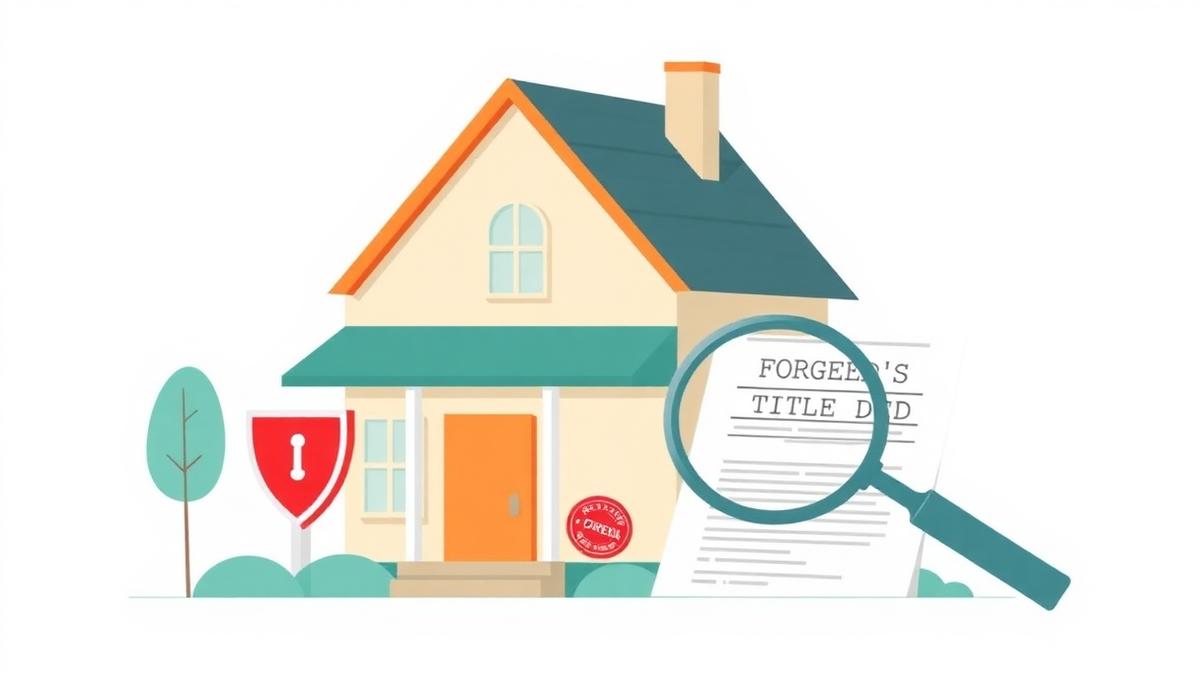
Property fraud can involve forged or altered allotment letters, transfer letters, sale deeds, NOCs, receipts, authority letters, power of attorney documents and property tax papers.
A document can look extremely professional and still require independent verification. For CDA properties, the authority maintains ownership and transfer records through its Estate Management functions. Verify the relevant record through the appropriate official process rather than relying solely on a photocopy supplied by a seller.
4. Fake NOC or approval claims
Another common warning sign is "the society is fully approved" or "the NOC is coming soon — just book now."
Do not treat a dealer's statement as proof of approval. For Islamabad developments, verify the relevant approval, planning and development status with the competent authority. CDA also publishes information concerning the control of marketing, sale and transfer of plots, flats, apartments and commercial units.
5. Property under mortgage, dispute or restriction
A property may appear perfectly legitimate but still have a problem preventing a safe transfer. CDA specifically identifies situations such as outstanding dues, disputed title, fraudulent-allotment scrutiny and court stays among circumstances that can restrict property transfer.
CDA's property-verification guidance also highlights mortgaged plots, illegally extended areas, changes from approved land-use plans and building-completion requirements. This is why checking ownership alone isn't enough.
6. Fake "owner" using a power of attorney
Someone may claim: "I'm not the owner, but I have full authority to sell it."
Don't simply accept a photograph or photocopy. Verify the document, the identity of the attorney, the authority granted and whether it is still legally operative. For a high-value transaction, have the documentation reviewed by a qualified property lawyer before making a substantial payment.
7. Token money trap
The seller may ask for "just PKR 100,000 to reserve the property." Once you pay, the seller may disappear, change the terms or claim that the token is non-refundable.
Before paying, understand exactly what you are buying, who owns it, which documents have been verified, whether the property is transferable, the refund conditions, who is receiving the money, and how the payment is documented.
8. Fake property photos or wrong location
Online listings can contain attractive photographs that don't represent the property — taken from another house, an old listing, digitally edited, from a different sector or society, or of a property the advertiser does not own.
Visit the actual property and independently confirm its location, plot number, street and surrounding area.
How to verify a property before paying
Step 1: Identify the exact property
Don't verify a vague description such as "10 marla house near F-10." Get the exact sector, street, plot/house number, property type, size and relevant allotment/transfer information. The property you inspect should be the same property described in the documentation.
Step 2: Verify ownership through the relevant authority
For CDA-controlled properties, use the appropriate CDA verification and transfer channels. CDA currently provides an Initial Property Verification Service (IPVS) that allows users to request a Property Verification Report based on available official information, intended to help buyers investigate property information before making decisions.
Do not treat an online report as a substitute for professional legal verification, but use official records as an important part of your due diligence.
Step 3: Check for outstanding dues
Ask whether any dues, taxes, charges or other liabilities are outstanding. CDA provides procedures for obtaining information about outstanding dues against a property. A cheap property with significant outstanding liabilities may not be the bargain it appears to be.
Step 4: Check transfer eligibility
Ask whether the property can actually be transferred. CDA's published procedures identify documentation required for property transfers, including original allotment/offer documentation and other supporting documents depending on the transaction. If the seller says "don't worry, transfer will be handled later," stop and investigate further.
Step 5: Verify development and approval status
For properties in housing schemes or developments, independently verify the relevant approval and development status. Never rely solely on dealer brochures, WhatsApp messages, Facebook posts, printed "approval" certificates or verbal promises.
Step 6: Verify the seller's identity
Ask for identification and compare it with the relevant ownership documentation. If the seller is acting through an attorney, verify the attorney documentation independently. If there are multiple owners, ensure the transaction has the required authority and signatures.
Step 7: Inspect the property yourself
Documents are not enough. Visit the property and check the exact location, plot/house number, physical boundaries, occupancy, construction, access road, utilities, neighbouring properties and any visible disputes or possession issues. If possible, visit more than once.
Step 8: Get professional legal review
For a significant purchase, paying an independent property lawyer to review the documents can be far cheaper than discovering a legal problem after paying millions of rupees. The lawyer should review the ownership chain, transfer documents, authority documents, applicable NOCs and other relevant records.
10-point property buyer safety checklist
- Confirm the exact property address, sector, street and plot/house number.
- Verify the seller's identity.
- Independently verify ownership.
- Check the relevant CDA/property authority records.
- Use CDA's available property verification service where applicable.
- Check outstanding dues, mortgage/lien and transfer restrictions.
- Verify development/NOC/approval status where applicable.
- Inspect the actual property yourself.
- Have important documents reviewed by an independent property lawyer.
- Do not pay a large token or advance because of artificial urgency.
Red flags that should make you walk away
Be extremely cautious if the seller refuses independent verification, won't show original documents, insists on cash immediately, says another buyer is waiting and you have only minutes to decide, offers a price dramatically below the market, refuses to meet at an appropriate location, wants payment into a third person's account without a clear explanation, provides only WhatsApp photos of documents, claims the property is "approved" but refuses verifiable evidence, says legal verification is unnecessary, or becomes aggressive when you ask questions.
A legitimate seller should not be afraid of reasonable due diligence.
Don't confuse a property listing with property verification
A listing on a classified platform is an advertisement — it is not a government ownership certificate. The photographs, description, price and seller information are useful starting points, but the buyer must independently verify the transaction. This distinction is especially important for high-value property.
How Isloo.pk helps
Isloo.pk is designed to connect buyers and sellers through local classifieds, but a marketplace cannot replace official property records, legal due diligence or professional advice.
If you find a suspicious property listing, use Isloo.pk's Report option and provide as much relevant information as possible. Warning signs may include suspiciously low prices, duplicate or copied property photographs, misleading descriptions, fake-looking documentation, pressure to pay before viewing, requests for unexplained advance payments, and inconsistent property information. Reporting suspicious listings helps protect other buyers as well.
Final advice
A property purchase should never be rushed because a seller claims "someone else is ready to pay right now."
Take the time to verify the owner, property records, transfer eligibility, dues, approvals and documents. See the property. Verify the records. Review the documents. Get legal advice. Then pay.
A genuine property deal can survive verification. A fraudulent one often cannot.
Frequently asked questions
How do I verify property ownership in Islamabad?
For CDA-controlled properties, verify ownership through CDA's official Estate Management verification and transfer channels, including the Initial Property Verification Service (IPVS) which issues a Property Verification Report based on available official records. Never rely only on photocopies provided by the seller.
Is it safe to pay token money before verification?
No. Pay a token only after you have confirmed the exact property, the legal owner, the seller's identity, transfer eligibility and outstanding dues — and always with a written, properly documented receipt.
How can I tell if a property NOC is fake?
Never accept a brochure, WhatsApp message or printed certificate as proof. Confirm the approval, planning and development status of the scheme directly with the competent authority before booking anything.
What are the biggest red flags in an Islamabad property listing?
A price far below market value, refusal to show original documents, pressure to decide within minutes, payment demanded into a third person's account, and refusal to allow independent verification.
Does Isloo.pk verify property listings?
Isloo.pk is a classifieds marketplace, not a property registry. Listings are advertisements and cannot replace official records or legal advice. Report suspicious listings using the Report option so we can review and remove them.
Important disclaimer
This article is provided for general awareness and scam-prevention purposes. Property laws, procedures, approvals and verification requirements can change and may differ depending on the authority, housing scheme and type of property. Buyers should confirm current information with the relevant government authority and obtain independent legal advice before making a property purchase or payment.
Related articles
Avoid Property Scams in Islamabad – Lessons from a Recent FIA Bust and Police Findings
Fake Mobile Phone Seller Scams in Islamabad – How to Spot a Counterfeit or Stolen Phone Before You Pay